Mineralienatlas (name for mineral atlas) is the platform for people interested in mineralogy, geology, palaeontology and mining since 2001. We operate a significant database for minerals, fossils, rocks and their localities. Mineralienatlas is not limited to a section. We bring together information and inform comprehensive.

To complete our information constantly, we need your support. With us, everyone can and should participate. Currently Mineralienatlas is used and expanded by 10533 members. Every month hundreds of thousands of visitors use our website as an information source.
 
Geolitho Foundation non-profit GmbH
Geolitho Foundation non-profit GmbH is the non-profit supporter of the Mineral Atlas (Mineralienatlas), the Lithotheque, the Geolitho Collection Management and the Marketplace and Store by collectors for collectors. The Foundation promotes public education in the field of mineralogy, geology, paleontology and mining by operating, maintaining and further expanding earth science projects.
 
https://crystalparadise.de/
https://www.juwelo.de
hausen - Mineraliengrosshandel.com
https://vfmg.de/der-aufschluss/
Mineralien Kalender
https://www.edelsteine-neuburg.de
 
Zirko­nia, auch bekan­nt als Zir­co­nia oder Fianit, bezeich­net kün­stlich hergestellte Einkris­talle aus Zir­co­ni­um(IV)-oxid (chemische Formel: ZrO2), die in ihr­er ku­bischen Hochtem­per­a­tur­phase sta­bil­isiert sind. Es han­delt sich dabei um kein natür­lich vork­om­men­des Min­er­al. Im Jahr 1937 ent­deck­ten die Min ... moreZirkonia, auch bekannt als Zirconia oder Fianit, bezeichnet künstlich hergestellte Einkristalle aus Zirconium(IV)-oxid (chemische Formel: ZrO2), die in ihrer kubischen Hochtemperaturphase stabilisiert sind. Es handelt sich dabei um kein natürlich vorkommendes Mineral. Im Jahr 1937 entdeckten die Mineralogen M. V. Stackelberg and K. Chudoba das natürliche Vorkommen von kubischem Zirkoniumoxid in Form mikroskopisch kleiner Körnchen in metamiktem Zirkon. Sie interpretierten diese Körnchen als Beiprodukt des Metamiktisierungsprozesse. Beide Mineralogen würdigten das Mineral nicht mit einem eigenen Namen, da ihnen dies damals unwesentlich erschien. Mittels Röntgendiffraktomie konnten sie die Existens des natürlichen Ebenbildes des künstlichen Produktes nachweisen.

Ein Beitrag von Klaus Schäfer
appetizer image
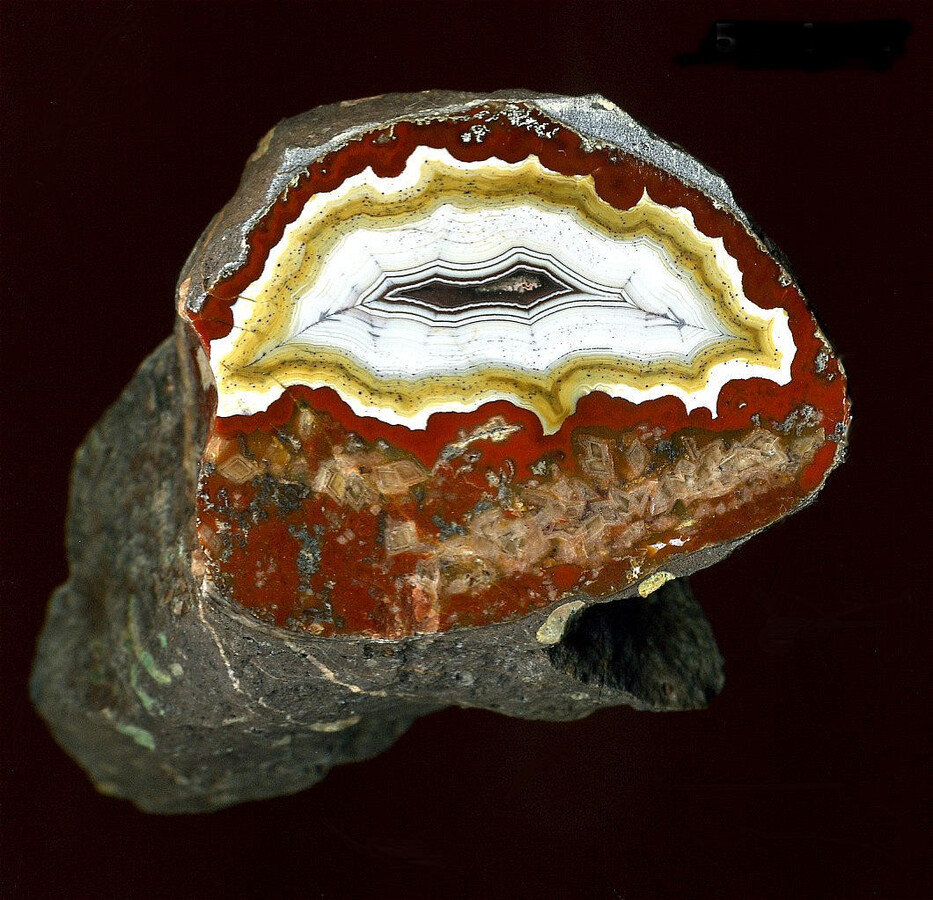
Jaspis ist eine mikrokris­tal­line, feinkörnige Va­ri­etät des Min­er­als Quarz und ge­hört wie die­s­es zur Min­er­alk­lasse der Oxide mit einem Stoff­men­gen­ver­hält­nis mit Me­t­all: Sauer­stoff = 1:2. Es ist eng ver­wandt mit dem stets faserig aufge­baut­en Chal­ce­don. Die Ver­wandtschaft ist so eng, dass so­gar Stücke ... moreJaspis ist eine mikrokristalline, feinkörnige Varietät des Minerals Quarz und gehört wie dieses zur Mineralklasse der Oxide mit einem Stoffmengenverhältnis mit Metall: Sauerstoff = 1:2. Es ist eng verwandt mit dem stets faserig aufgebauten Chalcedon. Die Verwandtschaft ist so eng, dass sogar Stücke vorkommen, bei denen körnig und faserig aufgebaute Quarzmaterialien miteinander verwachsen sind. Jaspis ist nur sehr selten in reiner Form zu finden. Durch Verwachsungen mit Achat und Opal, aber auch durch Fremdbeimengungen von bis zu 20 % wie Tonerde, Eisenoxid, Eisenhydroxid und Manganhydroxid schwanken seine chemischen und physikalischen Eigenschaften sehr stark. Da die Menge und Verteilung dieser Beimengungen über das Erscheinungsbild entscheiden, ist der Farb- und Varietätenspielraum des Jaspis außerordentlich groß.... Ein Beitrag von Peter Seroka
appetizer image
Un­ter den klas­sischen Fund­stellen für Azu­rit nimmt die Kupfer­er­zlager­stätte Chessy-les-Mines nord­west­lich von Ly­on eine ho­hen Stel­len­w­ert ein. Diese Azu­rite sind un­ter Samm­lern als "Ches­sylith" bekan­nt. Erst seit eini­gen Jahren kom­men aus Chi­na Stufen auf den Samm­ler­markt, die an die Stücke aus Ch­es ... moreUnter den klassischen Fundstellen für Azurit nimmt die Kupfererzlagerstätte Chessy-les-Mines nordwestlich von Lyon eine hohen Stellenwert ein. Diese Azurite sind unter Sammlern als "Chessylith" bekannt. Erst seit einigen Jahren kommen aus China Stufen auf den Sammlermarkt, die an die Stücke aus Chessy in etwa heranreichen. Chessy-Azurite besitzen bei Sammlern einen mindestens ebenso hohen Stellenwert wie Stücke aus Tsumeb, sind aber seltener und, in guter Qualität, unbezahlbar geworden. Funde werden, in bescheidenem Ausmaß, noch in den alten Halden getätigt. Die Größe der heute noch zu findenden Stücke haben in etwa den Durchmesser von Haselnüssen. Die Halden befinden sich in Privatbesitz und die Suche ist auf einen französischen Sammlerkreis begrenzt. Selten tauchen auf Börsen kleinere Stücke auf und Besitzer von Chessylithen trennen sich ...
appetizer image
Im al­tehr­würdi­gen Ge­bäude, 1515 als Ko­rn­speich­er er­richtet, befin­d­et sich das Min­er­al­o­gische Mu­se­um der Stadt Mar­burg. Die nach der Klas­si­fizierung von Strunz aufge­baut­en Samm­lung wird in zahl­reichen Vit­ri­nen auf drei Stock­w­erken präsen­tiert. Die ge­samte Lehr­samm­lung um­fasst ca. 45.000 Min­er­alien u ... moreIm altehrwürdigen Gebäude, 1515 als Kornspeicher errichtet, befindet sich das Mineralogische Museum der Stadt Marburg. Die nach der Klassifizierung von Strunz aufgebauten Sammlung wird in zahlreichen Vitrinen auf drei Stockwerken präsentiert. Die gesamte Lehrsammlung umfasst ca. 45.000 Mineralien und ca. 55.000 Gesteinsproben, von denen etwa 2.500 in den Vitrinen zu sehen sind.

Besonders hervorzuheben ist im 3. Stock die Ausstellung "Rio Grande do Sul - Brasilien", die dem Mineralogischen Museum und der Philipps-Universität von dem Sammlerehepaar Balzer 2005 gestiftet wurde. In zwei Großraumvitrinen werden Amethyste, Quarze, Calcite, Achate und Edelsteine aus Brasilien präsentiert. Die ästhetisch sehr ansprechende Ausstellung gehört zu den besten ihrer Art in Europa.

Nach Vereinbarung können auch Schulklassen durch die Ausstellungsräume geführt werden. Besonders hervorzuheben sind auch die regelmäßig stattfindenden Sonderausstellungen, die jedes Jahr mit einem anderen Thema von Dezember bis April zu sehen sind.
appetizer image
In­di­ca­tor stoneA Scandinavian indicator stone is a glacial erratic composed of a characteristic rock type derived from a small known source area in Scandinavia. This term not only applies to igneous and metamorphic rocks but also to some sedimentary rocks. The Jotnian Sandstone and most of the Palaeozoic limestones, and the Old Red Sandstone are not included in the definition, although the presence of these and other rocks provide some evidence about the source area(s) of erratics and should certainly not be neglected in a stone count. In all cases we recommend including the whole assemblage of erratics/stones in such account. This makes it possible to use several methods of Interpretation. However, it should be pointed out that the practise used in the past, whereby each researcher had her/his own method of interpreting stone counts, has proved to be unsatisfactory. We demonstrate on the bases of over 2000 counts of indicator stones that we have carried out on assemblages mostly from Lower Saxony and Schleswig-Holstein, but also from other N.German states and neighbouring countries, that the TGZ method (LÜTTIG 1958) yields the most reliable results. In addition to this method, the sources of individual indicator stones may be plotted on a so-called circle map and can be integrated with possible source data and the relative frequencies of other erratics in the assemblage. Some rock types are more suitable as indicator stones then others. It is unwise to use clearly unsuitable rock types; this would considerably reduce the reliability of the method and lead to erroneous results.
A Scan­di­na­vian in­di­ca­tor stone is a gla­cial er­rat­ic com­posed of a char­ac­teris­tic rock type de­rived from a small known source area in Scan­di­navia. This term not on­ly ap­plies to ig­neous and me­ta­mor­ph­ic rocks but al­so to some sed­i­men­tary rocks. The Jot­nian Sand­s­tone and most of the Palaeo­zoic lime­s­tone ... moreA Scandinavian indicator stone is a glacial erratic composed of a characteristic rock type derived from a small known source area in Scandinavia. This term not only applies to igneous and metamorphic rocks but also to some sedimentary rocks. The Jotnian Sandstone and most of the Palaeozoic limestones, and the Old Red Sandstone are not included in the definition, although the presence of these and other rocks provide some evidence about the source area(s) of erratics and should certainly not be neglected in a stone count. In all cases we recommend including the whole assemblage of erratics/stones in such account. This makes it possible to use several methods of Interpretation. However, it should be pointed out that the practise used in the past, whereby each researcher had her/his own method of interpreting stone counts, has proved to be unsatisfactory. We demonstrate on the bases of over 2000 counts of indicator stones that we have carried out on assemblages mostly from Lower Saxony and Schleswig-Holstein, but also from other N.German states and neighbouring countries, that the TGZ method (LÜTTIG 1958) yields the most reliable results. In addition to this method, the sources of individual indicator stones may be plotted on a so-called circle map and can be integrated with possible source data and the relative frequencies of other erratics in the assemblage. Some rock types are more suitable as indicator stones then others. It is unwise to use clearly unsuitable rock types; this would considerably reduce the reliability of the method and lead to erroneous results.
appetizer image
The min­er­al por­trait flu­o­rit is based on the book "SERO­KA, P.; 2001: FLU­O­RIT - Dat­en - Fak­ten - Weltweite Vorkom­men"; a de­tailed and ex­haus­tive in­for­ma­tion on the min­er­al's char­ac­teris­tics, the crys­tal forms, crys­tal growth and the dif­fer­ent ag­gre­gates and pseu­do­mor­phos­es.

Spe­cial chapters deal ... moreThe mineral portrait fluorit is based on the book "SEROKA, P.; 2001: FLUORIT - Daten - Fakten - Weltweite Vorkommen"; a detailed and exhaustive information on the mineral's characteristics, the crystal forms, crystal growth and the different aggregates and pseudomorphoses.

Special chapters deal with the fluorite deposits and global settings, the mining of fluorspar and ore processing; One chapter shows the development of fluorite collecting in the past and now.

The most comprehensive part of the book is dedicated to the mineral's worldwide deposits, describing the best known old, classic and modern occurrences in 96 countries . A great number of mineral and mining photographs accompany each chapter, showing the characteristics of most fluorites from a specific deposit.

(Full text in German)
appetizer image
 
https://www.lithomania.de
Edelsteintage Konstanz
https://fossilsworldwide.de/
https://www.mineralbox.biz
https://www.chiemgauer-mineralien-fossiliensammler.de/
https://www.mineral-bosse.de