

 Homepage
  Calendar
  Collector's characteristics
  History of Mineralienatlas
  Howto sponsor
  Our sponsores
  Search term inside Encyclopedia
  Full-text search
  Mineral by property
  Mineral by chemistry
  Help and how it works
  Mining
  Localities
  Geology (Rocks)
  Mineralogy (Minerals)
  Palaeontoloy (Fossils)
  Literature and Books
  Equipment and tools
  Portraits
  Encyclopedia pathes
  Media gallery
  Image reel
  User image galleries
  Images of the day
  Best of Images
  Newest forum contributions





03. Apr. - Tatort Franken – Das steinerne Grab der Riesenlurche
10. Apr. - Mineralienbörse im Lausitz-Center in Hoyerswerda
11. Apr. - Mineralienbörse im Lausitz-Center in Hoyerswerda
11. Apr. - 23. Mineralien-INFO im Ahrntal - Südtirol
11. Apr. - Mineralien.- und Fossilienbörse Rosenheim - Auer Festhalle
12. Apr. - 31. Mineralien- und Fossiliensammlerbörse Eggenburg / AT
12. Apr. - Mineralienbörse Herborn-Merkenbach
17. Apr. - GERA: Bildvortrag „Der Einfluss Preußens auf den Bergbau im
19. Apr. - 25. Bayerwald-Mineralienbörse Bad Kötzting, DE
26. Apr. - 34. Mineralien- und Fossilienbörse Arnsberg-Müschede, DE
09. May - 77. Internationale Mineralienbörse in Freiberg/Sachsen
09. May - 50. Mineralien- & Fossilienbörse “MINERANT2026” - Golden
09. May - 43. Aschaffenburger Mineralienbörse
10. Apr. - Mineralienbörse im Lausitz-Center in Hoyerswerda
11. Apr. - Mineralienbörse im Lausitz-Center in Hoyerswerda
11. Apr. - 23. Mineralien-INFO im Ahrntal - Südtirol
11. Apr. - Mineralien.- und Fossilienbörse Rosenheim - Auer Festhalle
12. Apr. - 31. Mineralien- und Fossiliensammlerbörse Eggenburg / AT
12. Apr. - Mineralienbörse Herborn-Merkenbach
17. Apr. - GERA: Bildvortrag „Der Einfluss Preußens auf den Bergbau im
19. Apr. - 25. Bayerwald-Mineralienbörse Bad Kötzting, DE
26. Apr. - 34. Mineralien- und Fossilienbörse Arnsberg-Müschede, DE
09. May - 77. Internationale Mineralienbörse in Freiberg/Sachsen
09. May - 50. Mineralien- & Fossilienbörse “MINERANT2026” - Golden
09. May - 43. Aschaffenburger Mineralienbörse

03. Apr. - Tatort Franken – Das steinerne Grab der Riesenlurche
10. Apr. - Mineralienbörse im Lausitz-Center in Hoyerswerda
11. Apr. - Mineralienbörse im Lausitz-Center in Hoyerswerda
11. Apr. - 23. Mineralien-INFO im Ahrntal - Südtirol
11. Apr. - Mineralien.- und Fossilienbörse Rosenheim - Auer Festhalle
12. Apr. - 31. Mineralien- und Fossiliensammlerbörse Eggenburg / AT
12. Apr. - Mineralienbörse Herborn-Merkenbach
17. Apr. - GERA: Bildvortrag „Der Einfluss Preußens auf den Bergbau im
19. Apr. - 25. Bayerwald-Mineralienbörse Bad Kötzting, DE
26. Apr. - 34. Mineralien- und Fossilienbörse Arnsberg-Müschede, DE
09. May - 77. Internationale Mineralienbörse in Freiberg/Sachsen
09. May - 50. Mineralien- & Fossilienbörse “MINERANT2026” - Golden
09. May - 43. Aschaffenburger Mineralienbörse
10. Apr. - Mineralienbörse im Lausitz-Center in Hoyerswerda
11. Apr. - Mineralienbörse im Lausitz-Center in Hoyerswerda
11. Apr. - 23. Mineralien-INFO im Ahrntal - Südtirol
11. Apr. - Mineralien.- und Fossilienbörse Rosenheim - Auer Festhalle
12. Apr. - 31. Mineralien- und Fossiliensammlerbörse Eggenburg / AT
12. Apr. - Mineralienbörse Herborn-Merkenbach
17. Apr. - GERA: Bildvortrag „Der Einfluss Preußens auf den Bergbau im
19. Apr. - 25. Bayerwald-Mineralienbörse Bad Kötzting, DE
26. Apr. - 34. Mineralien- und Fossilienbörse Arnsberg-Müschede, DE
09. May - 77. Internationale Mineralienbörse in Freiberg/Sachsen
09. May - 50. Mineralien- & Fossilienbörse “MINERANT2026” - Golden
09. May - 43. Aschaffenburger Mineralienbörse
 Imprint
 Data protection clause
 Our team

To complete our information constantly, we need your support. With us, everyone can and should participate. Currently Mineralienatlas is used and expanded by 10523 members. Every month hundreds of thousands of visitors use our website as an information source.

| Do you know El Tio, the ruler of the underworld? In January 2012 Stefan Schorn, administrator of mineralienatlas.de, had the chance to visit the Bolivian San José Mine. In his article he tells us about the history of the mine and shows us with over 60 pictures this adventuresome trip inside the mine ... moreDo you know El Tio, the ruler of the underworld? In January 2012 Stefan Schorn, administrator of mineralienatlas.de, had the chance to visit the Bolivian San José Mine. In his article he tells us about the history of the mine and shows us with over 60 pictures this adventuresome trip inside the mine. (Article in German) |
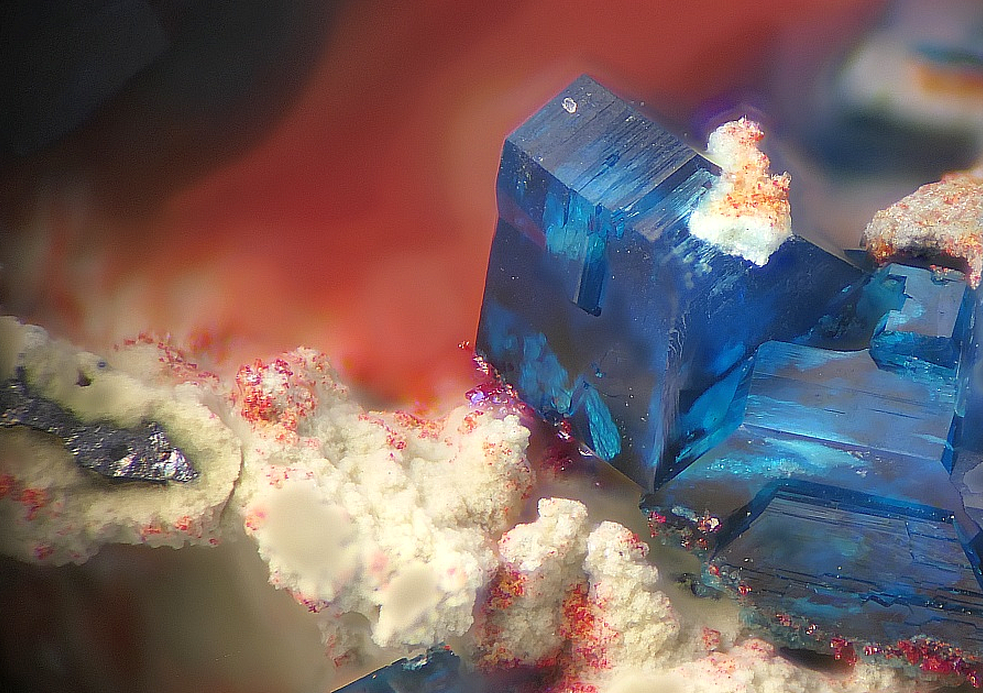
| Gypsum needels and blue Baryte have made this mine known for mineral collectors. A recent report from Sept. 2012 shows that good finds are still possible. To visit this mine is relatively easy. The evacuation of the gypsum needels on the other hand is more difficult. Unfortunately, vandals have left ... moreGypsum needels and blue Baryte have made this mine known for mineral collectors. A recent report from Sept. 2012 shows that good finds are still possible. To visit this mine is relatively easy. The evacuation of the gypsum needels on the other hand is more difficult. Unfortunately, vandals have left their mark, but read and see it yourself. A report by Stefan Schorn. (Article in German) |
| ... Die Nutzung der Zinkerze der Lagerstätte Altenberg ist seit 1344 belegt. Dort wurde Galmei abgebaut, welches schon vor der Erfindung der Direktverhüttung von Zinkerzen die Messingherstellung ermöglichte. Die hier betrachtete Lagerstätte Altenberg kann allerdings, im Gegensatz zur benachbarten La ... more... Die Nutzung der Zinkerze der Lagerstätte Altenberg ist seit 1344 belegt. Dort wurde Galmei abgebaut, welches schon vor der Erfindung der Direktverhüttung von Zinkerzen die Messingherstellung ermöglichte. Die hier betrachtete Lagerstätte Altenberg kann allerdings, im Gegensatz zur benachbarten Lagerstätte Gessenich (römisch: Grasciniacum) im Stolberger Raum, nicht bis in die Römerzeit zurück verfolgt werden. Auf den aktuellen topografischen Karten (z.B. Top25 Deutschland, Blatt 5202 Aachen) ist der Altenberg nicht mehr zu finden... ein Beitrag von Norbert Kirchhoff |
| The term used in the plural "pyrites" has often been misused in the past or in common for marcasite, chalcopyrite, pyrrhotite and other yellow to brass-colored minerals. The word pyrite is derived from the Greek "pyrites lithos" (derived pyr = fire and lithos = stone) and describes a characteristic ... moreThe term used in the plural "pyrites" has often been misused in the past or in common for marcasite, chalcopyrite, pyrrhotite and other yellow to brass-colored minerals. The word pyrite is derived from the Greek "pyrites lithos" (derived pyr = fire and lithos = stone) and describes a characteristic of the mineral, when rubbing against steel or flint (flint) to generate sparks. In prehistoric tombs pyrite concretions and unrolled pyrite where found, which supposed to be used for lighting a fire. (Article in German) |