

 Homepage
  Calendar
  Collector's characteristics
  History of Mineralienatlas
  Howto sponsor
  Our sponsores
  Search term inside Encyclopedia
  Full-text search
  Mineral by property
  Mineral by chemistry
  Help and how it works
  Mining
  Localities
  Geology (Rocks)
  Mineralogy (Minerals)
  Palaeontoloy (Fossils)
  Literature and Books
  Equipment and tools
  Portraits
  Encyclopedia pathes
  Media gallery
  Image reel
  User image galleries
  Images of the day
  Best of Images
  Newest forum contributions




709 Gäste, 13 Mitglieder (3 Versteckte)
rotbart, Lausitz, derhesse, blackforestmining2, rudi_strolz, füzz, Geomaxx, FF, Schorsch, TITANIT
rotbart, Lausitz, derhesse, blackforestmining2, rudi_strolz, füzz, Geomaxx, FF, Schorsch, TITANIT
Derzeit sind keine Benutzer im Chat


02. Apr. - Tatort Franken – Das steinerne Grab der Riesenlurche
10. Apr. - Mineralienbörse im Lausitz-Center in Hoyerswerda
11. Apr. - Mineralienbörse im Lausitz-Center in Hoyerswerda
11. Apr. - 23. Mineralien-INFO im Ahrntal - Südtirol
11. Apr. - Mineralien.- und Fossilienbörse Rosenheim - Auer Festhalle
12. Apr. - 31. Mineralien- und Fossiliensammlerbörse Eggenburg / AT
12. Apr. - Mineralienbörse Herborn-Merkenbach
17. Apr. - GERA: Bildvortrag „Der Einfluss Preußens auf den Bergbau im
19. Apr. - 25. Bayerwald-Mineralienbörse Bad Kötzting, DE
26. Apr. - 34. Mineralien- und Fossilienbörse Arnsberg-Müschede, DE
09. May - 77. Internationale Mineralienbörse in Freiberg/Sachsen
09. May - 50. Mineralien- & Fossilienbörse “MINERANT2026” - Golden
09. May - 43. Aschaffenburger Mineralienbörse
10. Apr. - Mineralienbörse im Lausitz-Center in Hoyerswerda
11. Apr. - Mineralienbörse im Lausitz-Center in Hoyerswerda
11. Apr. - 23. Mineralien-INFO im Ahrntal - Südtirol
11. Apr. - Mineralien.- und Fossilienbörse Rosenheim - Auer Festhalle
12. Apr. - 31. Mineralien- und Fossiliensammlerbörse Eggenburg / AT
12. Apr. - Mineralienbörse Herborn-Merkenbach
17. Apr. - GERA: Bildvortrag „Der Einfluss Preußens auf den Bergbau im
19. Apr. - 25. Bayerwald-Mineralienbörse Bad Kötzting, DE
26. Apr. - 34. Mineralien- und Fossilienbörse Arnsberg-Müschede, DE
09. May - 77. Internationale Mineralienbörse in Freiberg/Sachsen
09. May - 50. Mineralien- & Fossilienbörse “MINERANT2026” - Golden
09. May - 43. Aschaffenburger Mineralienbörse
02. Apr. - Tatort Franken – Das steinerne Grab der Riesenlurche
10. Apr. - Mineralienbörse im Lausitz-Center in Hoyerswerda
11. Apr. - Mineralienbörse im Lausitz-Center in Hoyerswerda
11. Apr. - 23. Mineralien-INFO im Ahrntal - Südtirol
11. Apr. - Mineralien.- und Fossilienbörse Rosenheim - Auer Festhalle
12. Apr. - 31. Mineralien- und Fossiliensammlerbörse Eggenburg / AT
12. Apr. - Mineralienbörse Herborn-Merkenbach
17. Apr. - GERA: Bildvortrag „Der Einfluss Preußens auf den Bergbau im
19. Apr. - 25. Bayerwald-Mineralienbörse Bad Kötzting, DE
26. Apr. - 34. Mineralien- und Fossilienbörse Arnsberg-Müschede, DE
09. May - 77. Internationale Mineralienbörse in Freiberg/Sachsen
09. May - 50. Mineralien- & Fossilienbörse “MINERANT2026” - Golden
09. May - 43. Aschaffenburger Mineralienbörse
10. Apr. - Mineralienbörse im Lausitz-Center in Hoyerswerda
11. Apr. - Mineralienbörse im Lausitz-Center in Hoyerswerda
11. Apr. - 23. Mineralien-INFO im Ahrntal - Südtirol
11. Apr. - Mineralien.- und Fossilienbörse Rosenheim - Auer Festhalle
12. Apr. - 31. Mineralien- und Fossiliensammlerbörse Eggenburg / AT
12. Apr. - Mineralienbörse Herborn-Merkenbach
17. Apr. - GERA: Bildvortrag „Der Einfluss Preußens auf den Bergbau im
19. Apr. - 25. Bayerwald-Mineralienbörse Bad Kötzting, DE
26. Apr. - 34. Mineralien- und Fossilienbörse Arnsberg-Müschede, DE
09. May - 77. Internationale Mineralienbörse in Freiberg/Sachsen
09. May - 50. Mineralien- & Fossilienbörse “MINERANT2026” - Golden
09. May - 43. Aschaffenburger Mineralienbörse
 Imprint
 Data protection clause
 Our team

To complete our information constantly, we need your support. With us, everyone can and should participate. Currently Mineralienatlas is used and expanded by 10521 members. Every month hundreds of thousands of visitors use our website as an information source.

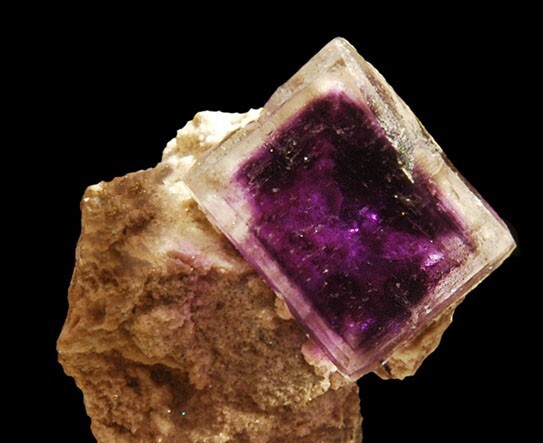
| ... Eigentümlich ist hier insbesondere, daß die ausgebildeten Flußspatkristalle ( es wurde bis jetzt fast nur das Hexaeder gefunden ), immer stark verunreinigt sind, während das kristalline Gangmaterial weit höhere Reinheit besitzt. Die Verunreinigung geht soweit, daß z.B. Kupferkies, Pyrit, Quarz o ... more... Eigentümlich ist hier insbesondere, daß die ausgebildeten Flußspatkristalle ( es wurde bis jetzt fast nur das Hexaeder gefunden ), immer stark verunreinigt sind, während das kristalline Gangmaterial weit höhere Reinheit besitzt. Die Verunreinigung geht soweit, daß z.B. Kupferkies, Pyrit, Quarz oder Ton im Innern der in Intervallen aufgebauten Kristalle gefärbte Schichten bildet. Es scheinen hier erst die zuletzt in die Höhe gestiegenen Lösungen so intensiv mit Sulfiden verunreinigt gewesen zu sein. Außerdem sind die Kristalle meist treppenartig gelagert, was durch die stengelige Ausbildung der Unterlage bedingt ist... Ein Beitrag von Michael Kommer |
| Der Begriff "Organische Mineralien" wird (leider) weltweit noch oft individuell definiert, obwohl es für diese Mineralgruppe seit einigen Jahren eine "Status Quo"-Klassifizierung gibt. Status Quo bedeutet im weiteren Sinn die Klassifizierung nach dem Strunz-System, insbesondere aber die Anerkennung ... moreDer Begriff "Organische Mineralien" wird (leider) weltweit noch oft individuell definiert, obwohl es für diese Mineralgruppe seit einigen Jahren eine "Status Quo"-Klassifizierung gibt. Status Quo bedeutet im weiteren Sinn die Klassifizierung nach dem Strunz-System, insbesondere aber die Anerkennung bzw. Aberkennung (Diskreditierung) der nachstehenden Mineralien durch die international verbindliche IMA-Regelung... Ein Beitrag unseres verstorbenen Freundes Peter Seroka |
| Iin 1546 Georgius Agricola reported about a white metal which is fused to the Rammelsberg lead and silver melter and that you could scrape off. He called this metal "contrefey", because it could imitate gold. Agricola did not recognize that this metal was zinc. He further observed that a similar met ... moreIin 1546 Georgius Agricola reported about a white metal which is fused to the Rammelsberg lead and silver melter and that you could scrape off. He called this metal "contrefey", because it could imitate gold. Agricola did not recognize that this metal was zinc. He further observed that a similar metal, which he named from some unknown reasons "ZINCUM" arose under similar circumstances in Silesia during smelting. |
| ... Erst knapp 50 Jahre später liegen wieder Nachrichten vor, und zwar Abrechnungen aus den Jahren 1782 bis 1791. Die damaligen Pächter waren die Krettnicher Einwohner Nicolaus Wiesen, Matthias Finkler und Johann Bathis, Ersterer hatte in den 10 Jahren 346 Rtl., der zweite 95 Rtl. und der letzte 146 ... more... Erst knapp 50 Jahre später liegen wieder Nachrichten vor, und zwar Abrechnungen aus den Jahren 1782 bis 1791. Die damaligen Pächter waren die Krettnicher Einwohner Nicolaus Wiesen, Matthias Finkler und Johann Bathis, Ersterer hatte in den 10 Jahren 346 Rtl., der zweite 95 Rtl. und der letzte 146 Rtl. eingenommen. Hauptabnehmer waren Johannes Scherer in Scheuern, Pastor Anhäuser in Lockweiler, sowie Johannes Bördeler (Birtel) in Krettnich, die offenbar das abgenommene Erz auf eigene Rechnung weitervertrieben. Als Bergmann war damals Paul Jungblut ... Ein Bericht von Berthold Stein |