

 Homepage
  Calendar
  Collector's characteristics
  History of Mineralienatlas
  Howto sponsor
  Our sponsores
  Search term inside Encyclopedia
  Full-text search
  Mineral by property
  Mineral by chemistry
  Help and how it works
  Mining
  Localities
  Geology (Rocks)
  Mineralogy (Minerals)
  Palaeontoloy (Fossils)
  Literature and Books
  Equipment and tools
  Portraits
  Encyclopedia pathes
  Media gallery
  Image reel
  User image galleries
  Images of the day
  Best of Images
  Newest forum contributions




06. Apr. - Tatort Franken – Das steinerne Grab der Riesenlurche
10. Apr. - Mineralienbörse im Lausitz-Center in Hoyerswerda
11. Apr. - Mineralienbörse im Lausitz-Center in Hoyerswerda
11. Apr. - 23. Mineralien-INFO im Ahrntal - Südtirol
11. Apr. - Mineralien.- und Fossilienbörse Rosenheim - Auer Festhalle
12. Apr. - 31. Mineralien- und Fossiliensammlerbörse Eggenburg / AT
12. Apr. - Mineralienbörse Herborn-Merkenbach
17. Apr. - GERA: Bildvortrag „Der Einfluss Preußens auf den Bergbau im
19. Apr. - 25. Bayerwald-Mineralienbörse Bad Kötzting, DE
26. Apr. - 34. Mineralien- und Fossilienbörse Arnsberg-Müschede, DE
09. May - 77. Internationale Mineralienbörse in Freiberg/Sachsen
09. May - 50. Mineralien- & Fossilienbörse “MINERANT2026” - Golden
09. May - 43. Aschaffenburger Mineralienbörse
10. Apr. - Mineralienbörse im Lausitz-Center in Hoyerswerda
11. Apr. - Mineralienbörse im Lausitz-Center in Hoyerswerda
11. Apr. - 23. Mineralien-INFO im Ahrntal - Südtirol
11. Apr. - Mineralien.- und Fossilienbörse Rosenheim - Auer Festhalle
12. Apr. - 31. Mineralien- und Fossiliensammlerbörse Eggenburg / AT
12. Apr. - Mineralienbörse Herborn-Merkenbach
17. Apr. - GERA: Bildvortrag „Der Einfluss Preußens auf den Bergbau im
19. Apr. - 25. Bayerwald-Mineralienbörse Bad Kötzting, DE
26. Apr. - 34. Mineralien- und Fossilienbörse Arnsberg-Müschede, DE
09. May - 77. Internationale Mineralienbörse in Freiberg/Sachsen
09. May - 50. Mineralien- & Fossilienbörse “MINERANT2026” - Golden
09. May - 43. Aschaffenburger Mineralienbörse


06. Apr. - Tatort Franken – Das steinerne Grab der Riesenlurche
10. Apr. - Mineralienbörse im Lausitz-Center in Hoyerswerda
11. Apr. - Mineralienbörse im Lausitz-Center in Hoyerswerda
11. Apr. - 23. Mineralien-INFO im Ahrntal - Südtirol
11. Apr. - Mineralien.- und Fossilienbörse Rosenheim - Auer Festhalle
12. Apr. - 31. Mineralien- und Fossiliensammlerbörse Eggenburg / AT
12. Apr. - Mineralienbörse Herborn-Merkenbach
17. Apr. - GERA: Bildvortrag „Der Einfluss Preußens auf den Bergbau im
19. Apr. - 25. Bayerwald-Mineralienbörse Bad Kötzting, DE
26. Apr. - 34. Mineralien- und Fossilienbörse Arnsberg-Müschede, DE
09. May - 77. Internationale Mineralienbörse in Freiberg/Sachsen
09. May - 50. Mineralien- & Fossilienbörse “MINERANT2026” - Golden
09. May - 43. Aschaffenburger Mineralienbörse
10. Apr. - Mineralienbörse im Lausitz-Center in Hoyerswerda
11. Apr. - Mineralienbörse im Lausitz-Center in Hoyerswerda
11. Apr. - 23. Mineralien-INFO im Ahrntal - Südtirol
11. Apr. - Mineralien.- und Fossilienbörse Rosenheim - Auer Festhalle
12. Apr. - 31. Mineralien- und Fossiliensammlerbörse Eggenburg / AT
12. Apr. - Mineralienbörse Herborn-Merkenbach
17. Apr. - GERA: Bildvortrag „Der Einfluss Preußens auf den Bergbau im
19. Apr. - 25. Bayerwald-Mineralienbörse Bad Kötzting, DE
26. Apr. - 34. Mineralien- und Fossilienbörse Arnsberg-Müschede, DE
09. May - 77. Internationale Mineralienbörse in Freiberg/Sachsen
09. May - 50. Mineralien- & Fossilienbörse “MINERANT2026” - Golden
09. May - 43. Aschaffenburger Mineralienbörse
 Imprint
 Data protection clause
 Our team

To complete our information constantly, we need your support. With us, everyone can and should participate. Currently Mineralienatlas is used and expanded by 10533 members. Every month hundreds of thousands of visitors use our website as an information source.

| We do not thumble stones to get smooth and even things that look like the tumbled stones in the esoteric shops, but to discover the secret of the stone. We have thumbled stones in the spirator for years and have documented our experiences with stones, machinery, abrasives and polishing techniques. O ... moreWe do not thumble stones to get smooth and even things that look like the tumbled stones in the esoteric shops, but to discover the secret of the stone. We have thumbled stones in the spirator for years and have documented our experiences with stones, machinery, abrasives and polishing techniques. Our experience will help you to avoid errors and run approach to the subject. |
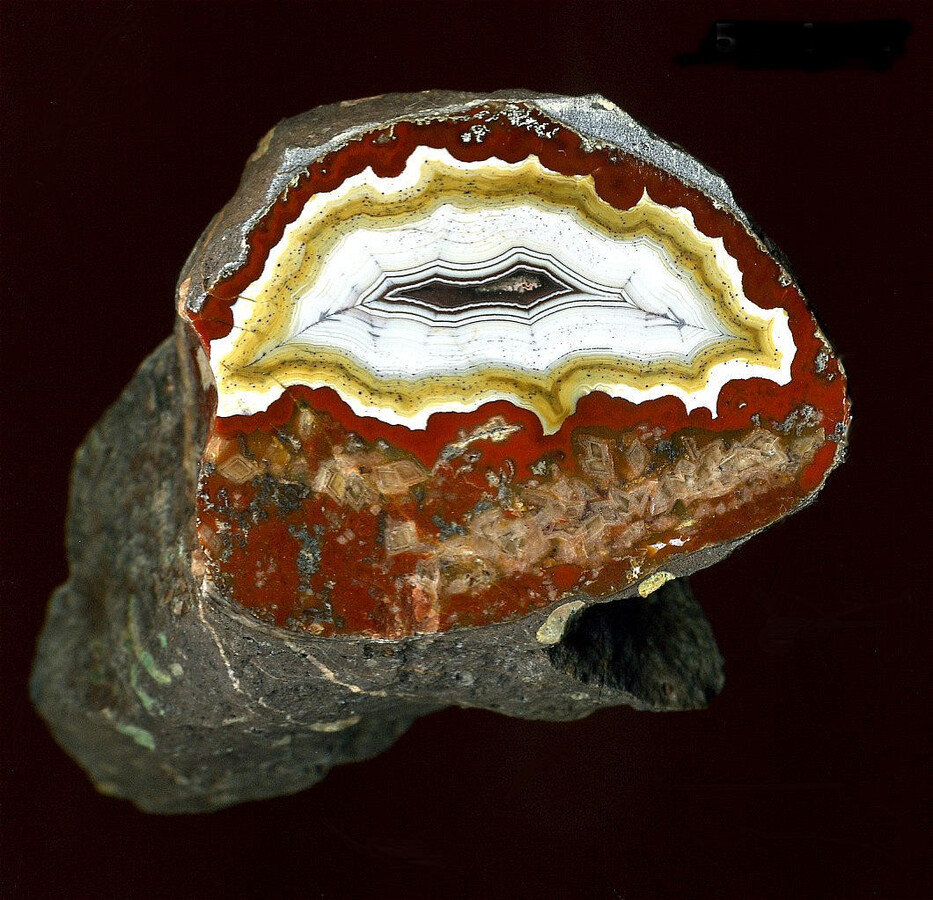
| Die Bildung der Achate am Karrenberg ist äußerst komplex und hochinteressant. Erkennbar wird dies zum einen an der Abfolge der Mineralisationen im Mandelbereich. In der direkten Umgebung der größeren Mandeln kann man mit viel Glück einen kleinen Graphiteinschluss ausma ein Beitarg von u.a. Klaus Sch ... moreDie Bildung der Achate am Karrenberg ist äußerst komplex und hochinteressant. Erkennbar wird dies zum einen an der Abfolge der Mineralisationen im Mandelbereich. In der direkten Umgebung der größeren Mandeln kann man mit viel Glück einen kleinen Graphiteinschluss ausma ein Beitarg von u.a. Klaus Schäfer chen, der von einigen Sammlern durch angenommene Bildung von Kohlenstoffgasen als mitverantwortlich für die Hohlraumbildung angesehen wird. Diese Graphiteinschlüsse wurden bei der Bildung des Schlotes, als dieser durch tiefer gelegen karbonische Schichten brach, mitgerissen. Die von aussen nach .... Ein Beitrag von Klaus Schäfer |
| Who first discovered the mineral cerussite and where it was first found remains in the darkness of history. However, to give it a name, the first mention is attributed to the Renaissance scholar Conrad Gesner - which does not mean, however, that he discovered or first described the mineral. (Gesner ... moreWho first discovered the mineral cerussite and where it was first found remains in the darkness of history. However, to give it a name, the first mention is attributed to the Renaissance scholar Conrad Gesner - which does not mean, however, that he discovered or first described the mineral. (Gesner (1516 to 1565) is considered the most famous and important naturalist and scholar of Switzerland)..... A mineral portrait of our unfortunately deceased friend Peter Seroka |