

 Homepage
  Calendar
  Collector's characteristics
  History of Mineralienatlas
  Howto sponsor
  Our sponsores
  Search term inside Encyclopedia
  Full-text search
  Mineral by property
  Mineral by chemistry
  Help and how it works
  Mining
  Localities
  Geology (Rocks)
  Mineralogy (Minerals)
  Palaeontoloy (Fossils)
  Literature and Books
  Equipment and tools
  Portraits
  Encyclopedia pathes
  Media gallery
  Image reel
  User image galleries
  Images of the day
  Best of Images
  Newest forum contributions




1.348 Gäste, 1 Mitglied (1 Versteckte)
Derzeit sind keine Benutzer im Chat


06. Apr. - Tatort Franken – Das steinerne Grab der Riesenlurche
10. Apr. - Mineralienbörse im Lausitz-Center in Hoyerswerda
11. Apr. - Mineralienbörse im Lausitz-Center in Hoyerswerda
11. Apr. - 23. Mineralien-INFO im Ahrntal - Südtirol
11. Apr. - Mineralien.- und Fossilienbörse Rosenheim - Auer Festhalle
12. Apr. - 31. Mineralien- und Fossiliensammlerbörse Eggenburg / AT
12. Apr. - Mineralienbörse Herborn-Merkenbach
17. Apr. - GERA: Bildvortrag „Der Einfluss Preußens auf den Bergbau im
19. Apr. - 25. Bayerwald-Mineralienbörse Bad Kötzting, DE
26. Apr. - 34. Mineralien- und Fossilienbörse Arnsberg-Müschede, DE
09. May - 77. Internationale Mineralienbörse in Freiberg/Sachsen
09. May - 50. Mineralien- & Fossilienbörse “MINERANT2026” - Golden
09. May - 43. Aschaffenburger Mineralienbörse
10. Apr. - Mineralienbörse im Lausitz-Center in Hoyerswerda
11. Apr. - Mineralienbörse im Lausitz-Center in Hoyerswerda
11. Apr. - 23. Mineralien-INFO im Ahrntal - Südtirol
11. Apr. - Mineralien.- und Fossilienbörse Rosenheim - Auer Festhalle
12. Apr. - 31. Mineralien- und Fossiliensammlerbörse Eggenburg / AT
12. Apr. - Mineralienbörse Herborn-Merkenbach
17. Apr. - GERA: Bildvortrag „Der Einfluss Preußens auf den Bergbau im
19. Apr. - 25. Bayerwald-Mineralienbörse Bad Kötzting, DE
26. Apr. - 34. Mineralien- und Fossilienbörse Arnsberg-Müschede, DE
09. May - 77. Internationale Mineralienbörse in Freiberg/Sachsen
09. May - 50. Mineralien- & Fossilienbörse “MINERANT2026” - Golden
09. May - 43. Aschaffenburger Mineralienbörse
06. Apr. - Tatort Franken – Das steinerne Grab der Riesenlurche
10. Apr. - Mineralienbörse im Lausitz-Center in Hoyerswerda
11. Apr. - Mineralienbörse im Lausitz-Center in Hoyerswerda
11. Apr. - 23. Mineralien-INFO im Ahrntal - Südtirol
11. Apr. - Mineralien.- und Fossilienbörse Rosenheim - Auer Festhalle
12. Apr. - 31. Mineralien- und Fossiliensammlerbörse Eggenburg / AT
12. Apr. - Mineralienbörse Herborn-Merkenbach
17. Apr. - GERA: Bildvortrag „Der Einfluss Preußens auf den Bergbau im
19. Apr. - 25. Bayerwald-Mineralienbörse Bad Kötzting, DE
26. Apr. - 34. Mineralien- und Fossilienbörse Arnsberg-Müschede, DE
09. May - 77. Internationale Mineralienbörse in Freiberg/Sachsen
09. May - 50. Mineralien- & Fossilienbörse “MINERANT2026” - Golden
09. May - 43. Aschaffenburger Mineralienbörse
10. Apr. - Mineralienbörse im Lausitz-Center in Hoyerswerda
11. Apr. - Mineralienbörse im Lausitz-Center in Hoyerswerda
11. Apr. - 23. Mineralien-INFO im Ahrntal - Südtirol
11. Apr. - Mineralien.- und Fossilienbörse Rosenheim - Auer Festhalle
12. Apr. - 31. Mineralien- und Fossiliensammlerbörse Eggenburg / AT
12. Apr. - Mineralienbörse Herborn-Merkenbach
17. Apr. - GERA: Bildvortrag „Der Einfluss Preußens auf den Bergbau im
19. Apr. - 25. Bayerwald-Mineralienbörse Bad Kötzting, DE
26. Apr. - 34. Mineralien- und Fossilienbörse Arnsberg-Müschede, DE
09. May - 77. Internationale Mineralienbörse in Freiberg/Sachsen
09. May - 50. Mineralien- & Fossilienbörse “MINERANT2026” - Golden
09. May - 43. Aschaffenburger Mineralienbörse
 Imprint
 Data protection clause
 Our team

To complete our information constantly, we need your support. With us, everyone can and should participate. Currently Mineralienatlas is used and expanded by 10533 members. Every month hundreds of thousands of visitors use our website as an information source.

| Iin 1546 Georgius Agricola reported about a white metal which is fused to the Rammelsberg lead and silver melter and that you could scrape off. He called this metal "contrefey", because it could imitate gold. Agricola did not recognize that this metal was zinc. He further observed that a similar met ... moreIin 1546 Georgius Agricola reported about a white metal which is fused to the Rammelsberg lead and silver melter and that you could scrape off. He called this metal "contrefey", because it could imitate gold. Agricola did not recognize that this metal was zinc. He further observed that a similar metal, which he named from some unknown reasons "ZINCUM" arose under similar circumstances in Silesia during smelting. |
| ... Am Ende der Braunkohlenzeit, im Pliozän, überwand der junge Rhein, aus der Mainzer Gegend kommend, zum ersten Mal das Rheinische Schiefergebirge. Mit dem Ausklingen der Braunkohlezeit schwand auch im nördlichen Rheinland das subtropische Klima. Zu dieser Zeit suchte der Rhein mit der Ur-Maas den ... more... Am Ende der Braunkohlenzeit, im Pliozän, überwand der junge Rhein, aus der Mainzer Gegend kommend, zum ersten Mal das Rheinische Schiefergebirge. Mit dem Ausklingen der Braunkohlezeit schwand auch im nördlichen Rheinland das subtropische Klima. Zu dieser Zeit suchte der Rhein mit der Ur-Maas den Weg zum Meer und lagerte die ältesten Diluvialschotter in Form von wasserhellen und milchigen Quarzen sowie anderen Kieselgesteinen ab. ... Ein Beitrag von Günter E. |
| After the discovery of silver deposits in Christiansdorf - the now called Freiberg - over the time the mining was also expanded on the upper mountain. Thus from about 1240, the tin deposits (with the beginnings of subsurface mining also silver) around Ehrenfriedersdorf was mined. By finding rich si ... moreAfter the discovery of silver deposits in Christiansdorf - the now called Freiberg - over the time the mining was also expanded on the upper mountain. Thus from about 1240, the tin deposits (with the beginnings of subsurface mining also silver) around Ehrenfriedersdorf was mined. By finding rich silver adits in the 2nd third of the 15th Century the great mountain towns like Schneeberg (municipal law since 1477) and Annaberg (municipal law since 1496) was founded. (Article in german) |
| ... Over time, rocks weather due to the influence of wind, water, ice, and daily and seasonal temperature differences. These weathering products form then short the pedosphere (the ground), go into solution in water (chemistry), are transported as dust, and similar processes. Long term, but they rea ... more... Over time, rocks weather due to the influence of wind, water, ice, and daily and seasonal temperature differences. These weathering products form then short the pedosphere (the ground), go into solution in water (chemistry), are transported as dust, and similar processes. Long term, but they rearrange stable, lithify and form sedimentary rocks, are transported into the deep, and after transformation (metamorphosis) reveal pushed back ... An article by Peter Seroka, written in German |
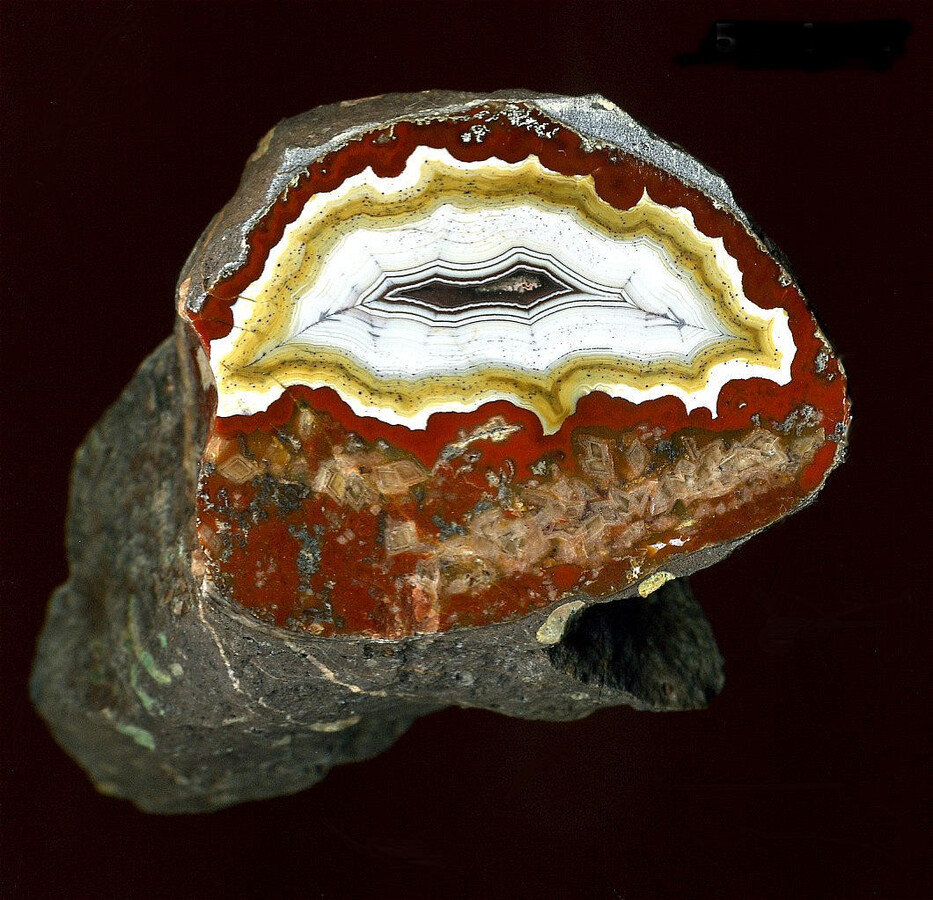
| Actually, this is a picturesque place in a well-kept forest. Nevertheless, in the past, evil itself is said to have preached to the damned here from a large, solitary, towering rock spur. Today, the term Devil's Pulpit inspires one to play with associations, as do the drawings of agates found here. ... moreActually, this is a picturesque place in a well-kept forest. Nevertheless, in the past, evil itself is said to have preached to the damned here from a large, solitary, towering rock spur. Today, the term Devil's Pulpit inspires one to play with associations, as do the drawings of agates found here. Their fantastic outlines, coupled with the unusual shape of the secondary rock, evoke images in the viewer that he would not have suspected in a stone. And on the devil's pulpit no longer an evil demon is waiting for the agate collector, but other executive powers threatening with purgatory... a contribution by Klaus Schäfer and others (in german) |