

 Homepage
  Calendar
  Collector's characteristics
  History of Mineralienatlas
  Howto sponsor
  Our sponsores
  Search term inside Encyclopedia
  Full-text search
  Mineral by property
  Mineral by chemistry
  Help and how it works
  Mining
  Localities
  Geology (Rocks)
  Mineralogy (Minerals)
  Palaeontoloy (Fossils)
  Literature and Books
  Equipment and tools
  Portraits
  Encyclopedia pathes
  Media gallery
  Image reel
  User image galleries
  Images of the day
  Best of Images
  Newest forum contributions





1.326 Gäste, 1 Mitglied (1 Versteckte)
Derzeit sind keine Benutzer im Chat

06. Apr. - Tatort Franken – Das steinerne Grab der Riesenlurche
10. Apr. - Mineralienbörse im Lausitz-Center in Hoyerswerda
11. Apr. - Mineralienbörse im Lausitz-Center in Hoyerswerda
11. Apr. - 23. Mineralien-INFO im Ahrntal - Südtirol
11. Apr. - Mineralien.- und Fossilienbörse Rosenheim - Auer Festhalle
12. Apr. - 31. Mineralien- und Fossiliensammlerbörse Eggenburg / AT
12. Apr. - Mineralienbörse Herborn-Merkenbach
17. Apr. - GERA: Bildvortrag „Der Einfluss Preußens auf den Bergbau im
19. Apr. - 25. Bayerwald-Mineralienbörse Bad Kötzting, DE
26. Apr. - 34. Mineralien- und Fossilienbörse Arnsberg-Müschede, DE
09. May - 77. Internationale Mineralienbörse in Freiberg/Sachsen
09. May - 50. Mineralien- & Fossilienbörse “MINERANT2026” - Golden
09. May - 43. Aschaffenburger Mineralienbörse
10. Apr. - Mineralienbörse im Lausitz-Center in Hoyerswerda
11. Apr. - Mineralienbörse im Lausitz-Center in Hoyerswerda
11. Apr. - 23. Mineralien-INFO im Ahrntal - Südtirol
11. Apr. - Mineralien.- und Fossilienbörse Rosenheim - Auer Festhalle
12. Apr. - 31. Mineralien- und Fossiliensammlerbörse Eggenburg / AT
12. Apr. - Mineralienbörse Herborn-Merkenbach
17. Apr. - GERA: Bildvortrag „Der Einfluss Preußens auf den Bergbau im
19. Apr. - 25. Bayerwald-Mineralienbörse Bad Kötzting, DE
26. Apr. - 34. Mineralien- und Fossilienbörse Arnsberg-Müschede, DE
09. May - 77. Internationale Mineralienbörse in Freiberg/Sachsen
09. May - 50. Mineralien- & Fossilienbörse “MINERANT2026” - Golden
09. May - 43. Aschaffenburger Mineralienbörse
06. Apr. - Tatort Franken – Das steinerne Grab der Riesenlurche
10. Apr. - Mineralienbörse im Lausitz-Center in Hoyerswerda
11. Apr. - Mineralienbörse im Lausitz-Center in Hoyerswerda
11. Apr. - 23. Mineralien-INFO im Ahrntal - Südtirol
11. Apr. - Mineralien.- und Fossilienbörse Rosenheim - Auer Festhalle
12. Apr. - 31. Mineralien- und Fossiliensammlerbörse Eggenburg / AT
12. Apr. - Mineralienbörse Herborn-Merkenbach
17. Apr. - GERA: Bildvortrag „Der Einfluss Preußens auf den Bergbau im
19. Apr. - 25. Bayerwald-Mineralienbörse Bad Kötzting, DE
26. Apr. - 34. Mineralien- und Fossilienbörse Arnsberg-Müschede, DE
09. May - 77. Internationale Mineralienbörse in Freiberg/Sachsen
09. May - 50. Mineralien- & Fossilienbörse “MINERANT2026” - Golden
09. May - 43. Aschaffenburger Mineralienbörse
10. Apr. - Mineralienbörse im Lausitz-Center in Hoyerswerda
11. Apr. - Mineralienbörse im Lausitz-Center in Hoyerswerda
11. Apr. - 23. Mineralien-INFO im Ahrntal - Südtirol
11. Apr. - Mineralien.- und Fossilienbörse Rosenheim - Auer Festhalle
12. Apr. - 31. Mineralien- und Fossiliensammlerbörse Eggenburg / AT
12. Apr. - Mineralienbörse Herborn-Merkenbach
17. Apr. - GERA: Bildvortrag „Der Einfluss Preußens auf den Bergbau im
19. Apr. - 25. Bayerwald-Mineralienbörse Bad Kötzting, DE
26. Apr. - 34. Mineralien- und Fossilienbörse Arnsberg-Müschede, DE
09. May - 77. Internationale Mineralienbörse in Freiberg/Sachsen
09. May - 50. Mineralien- & Fossilienbörse “MINERANT2026” - Golden
09. May - 43. Aschaffenburger Mineralienbörse
 Imprint
 Data protection clause
 Our team

To complete our information constantly, we need your support. With us, everyone can and should participate. Currently Mineralienatlas is used and expanded by 10533 members. Every month hundreds of thousands of visitors use our website as an information source.

| Calcite is one of the most abundant natural minerals. It is found in very different shapes, both compact as limestone as well as sinter in caves and in the crystalline state. But even in our daily life calcite is always present: in some regions it blockes water pipes as "chalk", we build our houses ... moreCalcite is one of the most abundant natural minerals. It is found in very different shapes, both compact as limestone as well as sinter in caves and in the crystalline state. But even in our daily life calcite is always present: in some regions it blockes water pipes as "chalk", we build our houses with it, it is in our food chain and without it we could not stand upright. Calcite is not rare, but the varied mineral on Earth. The variety of forms and variations of the forms of calcite are unmatched in the world of mineralogy. By 2009, more than 800 Calcit forms have been described. |
| This report gives a lot of details of the history of this mine. Contribution from Michael Kommer (written in german language) ... moreThis report gives a lot of details of the history of this mine. Contribution from Michael Kommer (written in german language) |
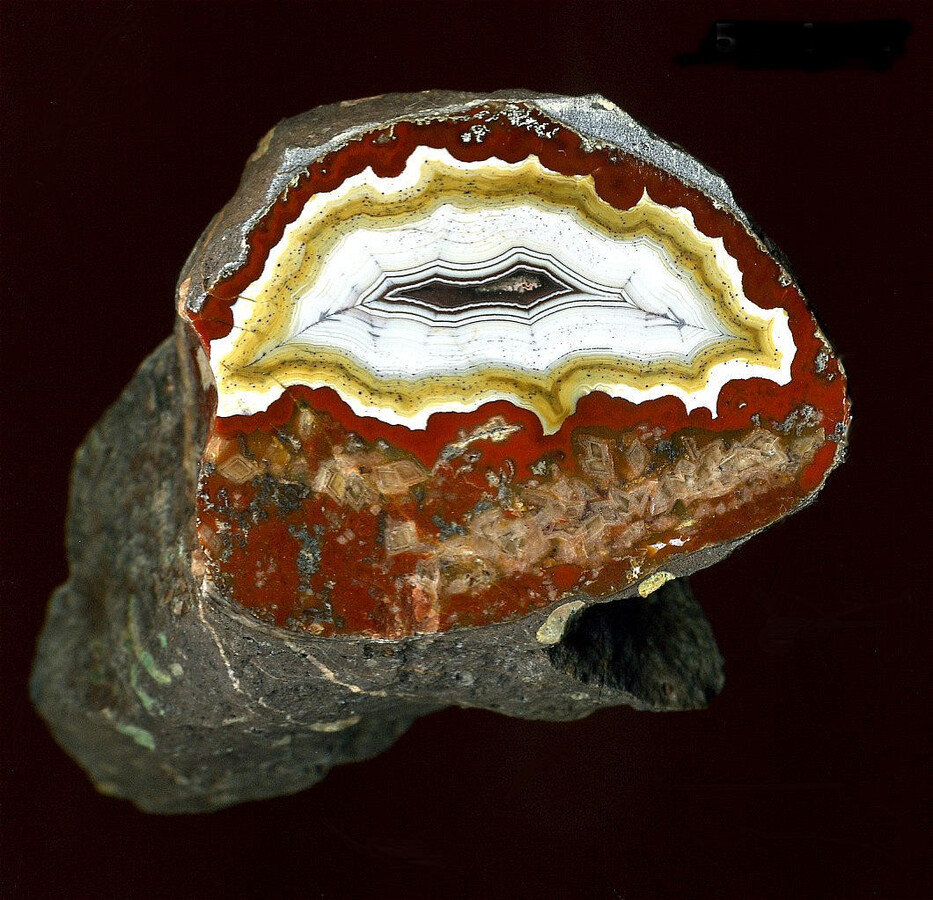
| Actually, this is a picturesque place in a well-kept forest. Nevertheless, in the past, evil itself is said to have preached to the damned here from a large, solitary, towering rock spur. Today, the term Devil's Pulpit inspires one to play with associations, as do the drawings of agates found here. ... moreActually, this is a picturesque place in a well-kept forest. Nevertheless, in the past, evil itself is said to have preached to the damned here from a large, solitary, towering rock spur. Today, the term Devil's Pulpit inspires one to play with associations, as do the drawings of agates found here. Their fantastic outlines, coupled with the unusual shape of the secondary rock, evoke images in the viewer that he would not have suspected in a stone. And on the devil's pulpit no longer an evil demon is waiting for the agate collector, but other executive powers threatening with purgatory... a contribution by Klaus Schäfer and others (in german) |
| Das Mineral Epidot ist vom griechischen Wort "epidosis" abgeleitet, was "Zunahme" oder "Zugabe" bedeutet. Die Deutung als "Zunahme" spielt möglicherweise auf die stengelig zunehmende Kristallform des Minerals an. Die Interpretation als "Zugabe" könnte auf die Tatsache zurückzuführen sein, dass es de ... moreDas Mineral Epidot ist vom griechischen Wort "epidosis" abgeleitet, was "Zunahme" oder "Zugabe" bedeutet. Die Deutung als "Zunahme" spielt möglicherweise auf die stengelig zunehmende Kristallform des Minerals an. Die Interpretation als "Zugabe" könnte auf die Tatsache zurückzuführen sein, dass es dem französischen Mineralogen René HAÜY erstmals im Jahre 1801 gelang, die beiden Silikate Turmalin und Epidot eindeutig auseinanderzuhalten und somit den Epidot als eigenständiges Mineral neben Turmalin stellte... Ein Beitrag von Peter Seroka |
| Die Fluoreszenz wurde zum ersten Mal beim Fluorit - einem Calcium-Fluorid - beobachtet (daher auch die Bezeichnung). Fluoreszenz beginnt sofort mit der Anregung durch die Lichtquelle und endet auch mit ihr (im Gegensatz dazu ist Phosphoreszenz ein Nachleuchten). Unter Tageslicht-Fluoreszenz versteht ... moreDie Fluoreszenz wurde zum ersten Mal beim Fluorit - einem Calcium-Fluorid - beobachtet (daher auch die Bezeichnung). Fluoreszenz beginnt sofort mit der Anregung durch die Lichtquelle und endet auch mit ihr (im Gegensatz dazu ist Phosphoreszenz ein Nachleuchten). Unter Tageslicht-Fluoreszenz versteht man eine Fluoreszenz, die durch den UV-Anteil im natürlichen Licht verursacht wird und z.B. manche Fluorite unter natürlichem bzw. künstlichen Licht andersfarbig erscheinen lässt. |