

 Homepage
  Calendar
  Collector's characteristics
  History of Mineralienatlas
  Howto sponsor
  Our sponsores
  Search term inside Encyclopedia
  Full-text search
  Mineral by property
  Mineral by chemistry
  Help and how it works
  Mining
  Localities
  Geology (Rocks)
  Mineralogy (Minerals)
  Palaeontoloy (Fossils)
  Literature and Books
  Equipment and tools
  Portraits
  Encyclopedia pathes
  Media gallery
  Image reel
  User image galleries
  Images of the day
  Best of Images
  Newest forum contributions



710 Gäste, 0 Mitglieder
Derzeit sind keine Benutzer im Chat


03. Apr. - Tatort Franken – Das steinerne Grab der Riesenlurche
10. Apr. - Mineralienbörse im Lausitz-Center in Hoyerswerda
11. Apr. - Mineralienbörse im Lausitz-Center in Hoyerswerda
11. Apr. - 23. Mineralien-INFO im Ahrntal - Südtirol
11. Apr. - Mineralien.- und Fossilienbörse Rosenheim - Auer Festhalle
12. Apr. - 31. Mineralien- und Fossiliensammlerbörse Eggenburg / AT
12. Apr. - Mineralienbörse Herborn-Merkenbach
17. Apr. - GERA: Bildvortrag „Der Einfluss Preußens auf den Bergbau im
19. Apr. - 25. Bayerwald-Mineralienbörse Bad Kötzting, DE
26. Apr. - 34. Mineralien- und Fossilienbörse Arnsberg-Müschede, DE
09. May - 77. Internationale Mineralienbörse in Freiberg/Sachsen
09. May - 50. Mineralien- & Fossilienbörse “MINERANT2026” - Golden
09. May - 43. Aschaffenburger Mineralienbörse
10. Apr. - Mineralienbörse im Lausitz-Center in Hoyerswerda
11. Apr. - Mineralienbörse im Lausitz-Center in Hoyerswerda
11. Apr. - 23. Mineralien-INFO im Ahrntal - Südtirol
11. Apr. - Mineralien.- und Fossilienbörse Rosenheim - Auer Festhalle
12. Apr. - 31. Mineralien- und Fossiliensammlerbörse Eggenburg / AT
12. Apr. - Mineralienbörse Herborn-Merkenbach
17. Apr. - GERA: Bildvortrag „Der Einfluss Preußens auf den Bergbau im
19. Apr. - 25. Bayerwald-Mineralienbörse Bad Kötzting, DE
26. Apr. - 34. Mineralien- und Fossilienbörse Arnsberg-Müschede, DE
09. May - 77. Internationale Mineralienbörse in Freiberg/Sachsen
09. May - 50. Mineralien- & Fossilienbörse “MINERANT2026” - Golden
09. May - 43. Aschaffenburger Mineralienbörse

03. Apr. - Tatort Franken – Das steinerne Grab der Riesenlurche
10. Apr. - Mineralienbörse im Lausitz-Center in Hoyerswerda
11. Apr. - Mineralienbörse im Lausitz-Center in Hoyerswerda
11. Apr. - 23. Mineralien-INFO im Ahrntal - Südtirol
11. Apr. - Mineralien.- und Fossilienbörse Rosenheim - Auer Festhalle
12. Apr. - 31. Mineralien- und Fossiliensammlerbörse Eggenburg / AT
12. Apr. - Mineralienbörse Herborn-Merkenbach
17. Apr. - GERA: Bildvortrag „Der Einfluss Preußens auf den Bergbau im
19. Apr. - 25. Bayerwald-Mineralienbörse Bad Kötzting, DE
26. Apr. - 34. Mineralien- und Fossilienbörse Arnsberg-Müschede, DE
09. May - 77. Internationale Mineralienbörse in Freiberg/Sachsen
09. May - 50. Mineralien- & Fossilienbörse “MINERANT2026” - Golden
09. May - 43. Aschaffenburger Mineralienbörse
10. Apr. - Mineralienbörse im Lausitz-Center in Hoyerswerda
11. Apr. - Mineralienbörse im Lausitz-Center in Hoyerswerda
11. Apr. - 23. Mineralien-INFO im Ahrntal - Südtirol
11. Apr. - Mineralien.- und Fossilienbörse Rosenheim - Auer Festhalle
12. Apr. - 31. Mineralien- und Fossiliensammlerbörse Eggenburg / AT
12. Apr. - Mineralienbörse Herborn-Merkenbach
17. Apr. - GERA: Bildvortrag „Der Einfluss Preußens auf den Bergbau im
19. Apr. - 25. Bayerwald-Mineralienbörse Bad Kötzting, DE
26. Apr. - 34. Mineralien- und Fossilienbörse Arnsberg-Müschede, DE
09. May - 77. Internationale Mineralienbörse in Freiberg/Sachsen
09. May - 50. Mineralien- & Fossilienbörse “MINERANT2026” - Golden
09. May - 43. Aschaffenburger Mineralienbörse
 Imprint
 Data protection clause
 Our team

To complete our information constantly, we need your support. With us, everyone can and should participate. Currently Mineralienatlas is used and expanded by 10522 members. Every month hundreds of thousands of visitors use our website as an information source.

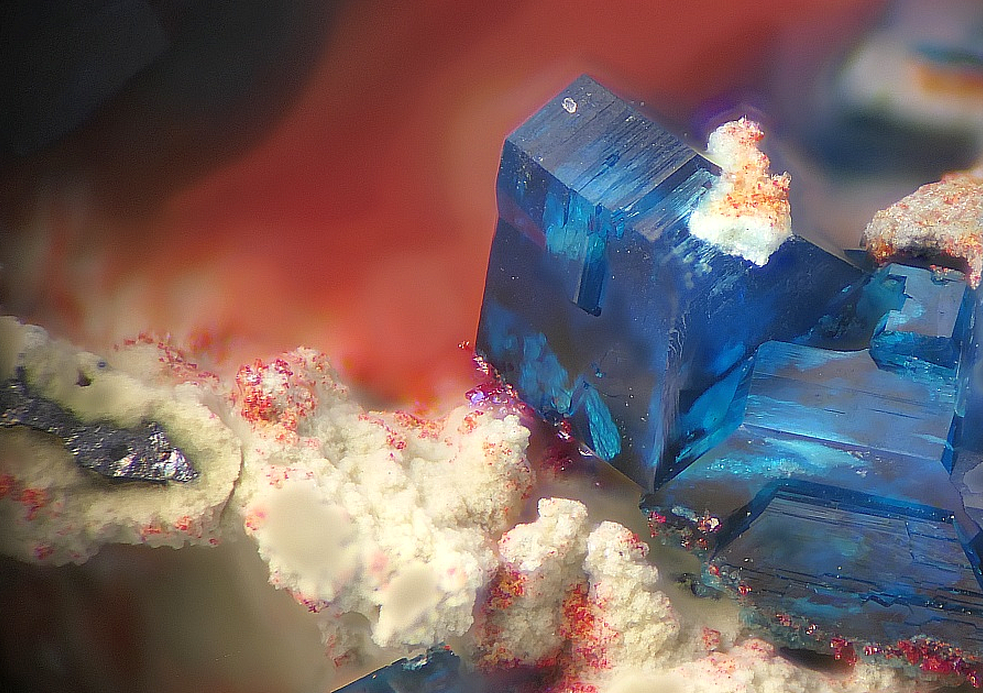
| For Mineral collectors who travel in their vacation to the mining area of La Union, the mina Precaución is an easy to reach and in 2010 a worthwhile target to collect attractive pieces with hemimorphite, calcite and more minerals on contrast rich matrix. Equipped with helmet, forehead lamp, chisel ... moreFor Mineral collectors who travel in their vacation to the mining area of La Union, the mina Precaución is an easy to reach and in 2010 a worthwhile target to collect attractive pieces with hemimorphite, calcite and more minerals on contrast rich matrix. Equipped with helmet, forehead lamp, chisel and hammer nice pieces can be rescued easily, taking into account the security rules for mining visits. |
| Siderit war neben Hämatit, Limonit, Goethit und Magnetit immer eines der wichtigsten Eisenerze, wobei es kaum nachvollziehbar ist, welches dieser spezifischen Minerale zu einer bestimmten Zeit verhüttet wurde - ausgenommen, die Überreste urgeschichtlicher bis antiker und mittelalterlicher Eisengewin ... moreSiderit war neben Hämatit, Limonit, Goethit und Magnetit immer eines der wichtigsten Eisenerze, wobei es kaum nachvollziehbar ist, welches dieser spezifischen Minerale zu einer bestimmten Zeit verhüttet wurde - ausgenommen, die Überreste urgeschichtlicher bis antiker und mittelalterlicher Eisengewinnung sind eng an ein spezifisches Siderit-Vorkommen gebunden. Im Grunde genommen gibt es für Siderit keine eigene Geschichte, es sei denn, man erforscht sie mit einem interdisziplinären Ansatz im Zusammenspiel von Ethnologen, Montanhistorikern, Geologen und Ingenieuren. Ein Mineralienportrait geschrieben von Peter Seroka |
| The Mineralientage München 2025 – The Munich Show once again showcased a fascinating variety of minerals, fossils, and jewelry. Although visitor numbers appeared slightly lower than last year, the fair remained vibrant and diverse. Highlights included the collector displays and the special exhibitio ... moreThe Mineralientage München 2025 – The Munich Show once again showcased a fascinating variety of minerals, fossils, and jewelry. Although visitor numbers appeared slightly lower than last year, the fair remained vibrant and diverse. Highlights included the collector displays and the special exhibition on natural resources, while the fossil section was somewhat smaller. Some visitors expressed a wish for more seating areas, opportunities for exchange, and more eye-catching advertising, yet overall the event left a very positive impression and remains a must-visit for collectors and families alike. |
| Die Bodenschätze der Insel stammen vor allem aus submarinen Gebirgsbildungen. Kupfer, das als Sulfid vorkommt, entstand, als am Tethysboden Meerwasser in die vorhandenen Gesteinsklüfte eindrang und die im Nebengestein vorkommenden Metalle löste. Diese stiegen dann als Kupfer-, Eisen- und Zinksulfide ... moreDie Bodenschätze der Insel stammen vor allem aus submarinen Gebirgsbildungen. Kupfer, das als Sulfid vorkommt, entstand, als am Tethysboden Meerwasser in die vorhandenen Gesteinsklüfte eindrang und die im Nebengestein vorkommenden Metalle löste. Diese stiegen dann als Kupfer-, Eisen- und Zinksulfide auf. Die untermeerisch geförderten Basalte erstarrten wulst- und kissenartig und bilden die sogenannte Kissenlava (Pillolaven). |
| The metal extraction by ore leaching (mostly copper) was about 1,000 years BC. known in the Mediterranean, but there are also barely no written records. The in the Middle Ages and in the following Renaissance well-known different procedures were first described in detail by Georg Agricola 1556 in hi ... moreThe metal extraction by ore leaching (mostly copper) was about 1,000 years BC. known in the Mediterranean, but there are also barely no written records. The in the Middle Ages and in the following Renaissance well-known different procedures were first described in detail by Georg Agricola 1556 in his book "De Re Metallica Libri XII". A contribution by Peter Seroka |